July 21, 2026

How AI Will Replace Your PCP — If It Hasn’t Already
A couple of weeks ago, I read Reid Hoffman’s latest Theory of the Game piece, “What If Everyone Could Afford an Expert?” In it, he posits a not-too-distant future where everyone has access to a team of “AI expert advisors,” including an AI doctor, lawyer and tutor.
As I read the article, I at times found myself nodding along in agreement. Then, I got to his account of a woman who turned to ChatGPT when her doctor’s diagnosis of rheumatoid arthritis didn’t match her worsening symptoms. At that point, I started to question his conclusions.
ChatGPT suggested the woman might have Hashimoto’s thyroiditis, an autoimmune thyroid condition, and it suggested she have her doctor test her TPO levels. (TPO antibodies are a marker of the condition.)
“That’s it,” I thought: AI can help you diagnose a problem you might have turned to a primary care provider (PCP) for, but it can’t solve it. At the time of this writing, you still need the doctor — or yourself — to order diagnostic lab tests. AI can’t order them for you, at least not today. And if it turns out you have an issue that requires a prescription, AI can’t write the prescription for you.
I was feeling rather proud of myself for finding a hole in Hoffman’s argument: Sure, AI could help you diagnose your problem, but it can’t treat it for you. So, AI won’t be your PCP anytime soon.
At the end of Hoffman’s piece, I concluded that AI wasn’t going to save us all from the PCP shortage, which will only worsen over time. Instead of having a slew of nonconsumers who can’t access a PCP for a diagnosis, AI that can diagnose just creates a slew of individuals who may know what’s wrong with them, but can’t access the treatment they still need a human PCP to provide.
Effectively, AI just moves the line from those waiting for diagnosis to those waiting for treatment.
But then…
Regulation Can Crush or Enable an Innovation’s Success
…I thought about the four components that lead to a successful Disruptive Innovation.
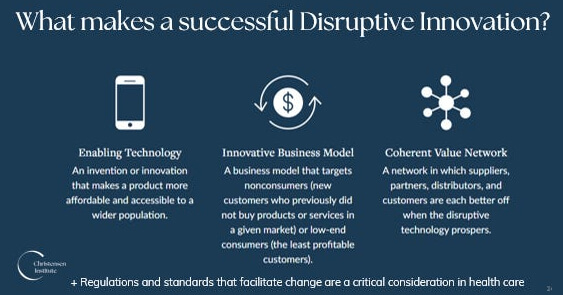
All we really need for AI to perform more of the components of a PCP’s job is a regulation change that allows AI to write prescriptions.
And a few such changes are already underway. In Utah, Doctronic is running a year-long pilot in which AI processes prescription refills for nearly 200 chronic conditions. Importantly, the AI can authorize refills only for those who were initially prescribed by a human clinician. The pilot is still in Phase 1, but there haven’t been any safety issues yet.
Additionally, late in June, UpDoc received FDA approval for AI to adjust medication doses between doctor(s) appointments. It does so by calling or messaging patients and operating within parameters set by a human clinician.
So, despite my original thinking, I made an about-face. I now strongly believe AI will be our PCP sooner than we think. Because that’s how disruption unfolds: gradually and in ways the market doesn’t originally expect.
For Some, AI Already Is Their PCP
Cleveland Clinic defines a primary care physician as “your go-to healthcare provider whenever you have a question, concern or symptom. They diagnose and treat a wide range of common conditions — like strep throat, prediabetes and high blood pressure. They also help you prevent health issues from starting or getting worse and refer you to specialists as needed.”
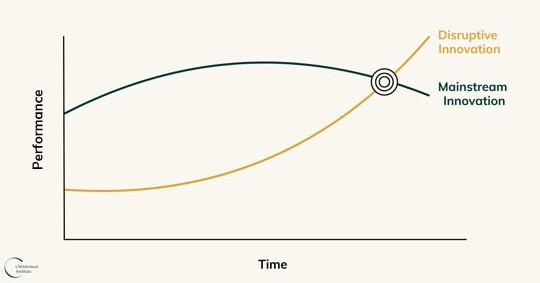
While AI can’t refer you to a specialist, write a prescription (yet), or prevent health issues (entirely), it can do some things a PCP can. And that’s a hallmark of Disruptive Innovation: What starts out as inferior, and is at first dismissed by incumbents, improves over time and ultimately overtakes the market. Think CVS Minute Clinic replacing a trip to the emergency room (ER) or the pediatrician for an ear infection, Teladoc or DispatchHealth replacing a trip to urgent care, manual glucose monitors replacing a lab draw or compounded GLP-1s competing with branded alternatives. So, yes, ChatGPT (or any other AI chatbot) is currently inferior to a PCP in that it can’t perform all the functions a human PCP can.
It won’t stay that way forever. Disruptive Innovations never do.
A personal experience this weekend drove this point home to me.
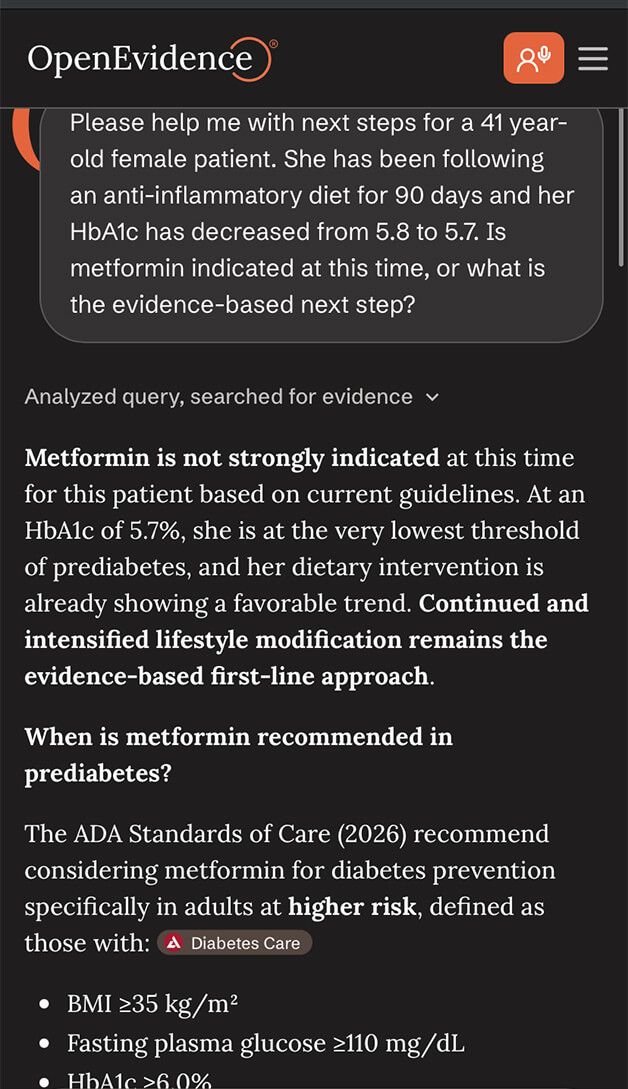 I was catching up with my sister-in-law, and she was sharing her latest experiences with her anti-inflammatory diet. She was disappointed that her HbA1c had only dropped 0.1% in the 90 days she’d been following the diet, and she reported her PCP suggested she start taking metformin.
Given what I’d learned working alongside lifestyle medicine PCPs, I was shocked by the recommendation. I explained my reaction to her, validated her decision not to take the medication yet, and provided anecdotes for why I thought her PCP was wrong. She appreciated the reassurance that she’d made the right decision to continue with her lifestyle change and reassess her labs in a few months.
But over the next 24 hours, I couldn’t let go of the feeling that I may have led her astray. I’m not a clinician. I have no clinical degree. I’ve never been trained in diabetes prevention. I really shouldn’t have advised her at all.
Then, last night, as I was about to call my sister, who is a family medicine nurse practitioner, I paused. It was late, and I hadn’t asked OpenEvidence any questions this month. So, I opened my phone’s browser and posed my query.
Relieved that I hadn’t led my sister-in-law astray, I shared the screenshot of OpenEvidence’s response. Her response, “Yay!! I feel so validated!” embodied my own reaction, too.
And as I shared this with her, I realized that not only are AI offerings like ChatGPT, OpenEvidence, and more on an upmarket march to replace PCPs, but that for many people, they already have.
What I didn’t expect was that I was one of them.

About the Author

Recent Posts