January 6, 2026

Lessons From the Healthcare Innovation Trenches: How to Succeed Where We Failed
Now’s the Time to Tap Into Underserved Jobs to Be Done
I recently got to sit in on the Harvard Business School class Building and Sustaining a Successful Enterprise (BSSE), a Masters of Business Administration course made famous by Clay Christensen. In this class, students were discussing the Atrium Health case. The case dives into Atrium’s attempt to launch an innovative, value-based, primary care model in response to the market disruptions it anticipated. The model was called Proactive Health.
I lived through the innovation the case is centered around, so BSSE professor Derek van Bever invited me to join the class that day and share my first-hand experience with the students. It was fascinating to listen to the class dissect our experience, call out what the theory would have predicted about the missteps we made and discuss the role of culture (and why cultures form the way they do).
At the end of the class, the professor asked me a question I have yet to forget: “What did it feel like to support this innovation, effectively breaking the rules of the organization?” I didn’t have to think. The answer was clear: “Stressful!”
Why share this? As I listened to the classroom discussion, I realized my stress provided key insights for today’s innovators. Not just because I learned lessons about launching a healthcare startup, but also because Proactive Health was a model ahead of its time. A decade ago, healthy aging wasn’t the mainstream topic it is today. But now, the environment is different.
Today, you can’t see the day’s news without passing at least one headline around longevity or healthspan, and Google Trends highlights how public interest in longevity has skyrocketed in recent years. “Proactive, preventive and personalized” were the words we used to describe Proactive Health, and these are the same words used to describe much of the longevity movement’s tenets today.
As I listened to the students’ analyses, I couldn’t help but wonder, “Would Proactive Health have succeeded if we’d launched it a few years later?” To answer with an affirmative “yes” would be to view history through rose-colored glasses. If we had launched it a few years later (i.e., from within an incumbent organization in the same way), it still would have failed, even though it served unmet patient Jobs to Be Done (JTBD).
But what would it look like to build Proactive Health today in a way that would succeed, given the current appetite for such a solution? That’s what I tackle here. To the innovators, entrepreneurs and investors, I hope our mistakes and, critically, what we learned about people’s JTBDs, can help you as you build for the future. In this post, I’ll cover:
- What Proactive Health was
- Why it failed
- What we learned that still holds true today (i.e., people’s JTBDs)
- Tips for innovators building for today’s health-conscious consumer
What was Proactive Health?
Proactive Health was a value-based primary care model, grounded in a total health experience for patients. It was built on the premise that lifestyle medicine was effective at improving health outcomes and that this approach was desired by at least a subset of the market. A forward-thinking physician designed it to be personalized, proactive and preventive, and built it around six pillars of health.
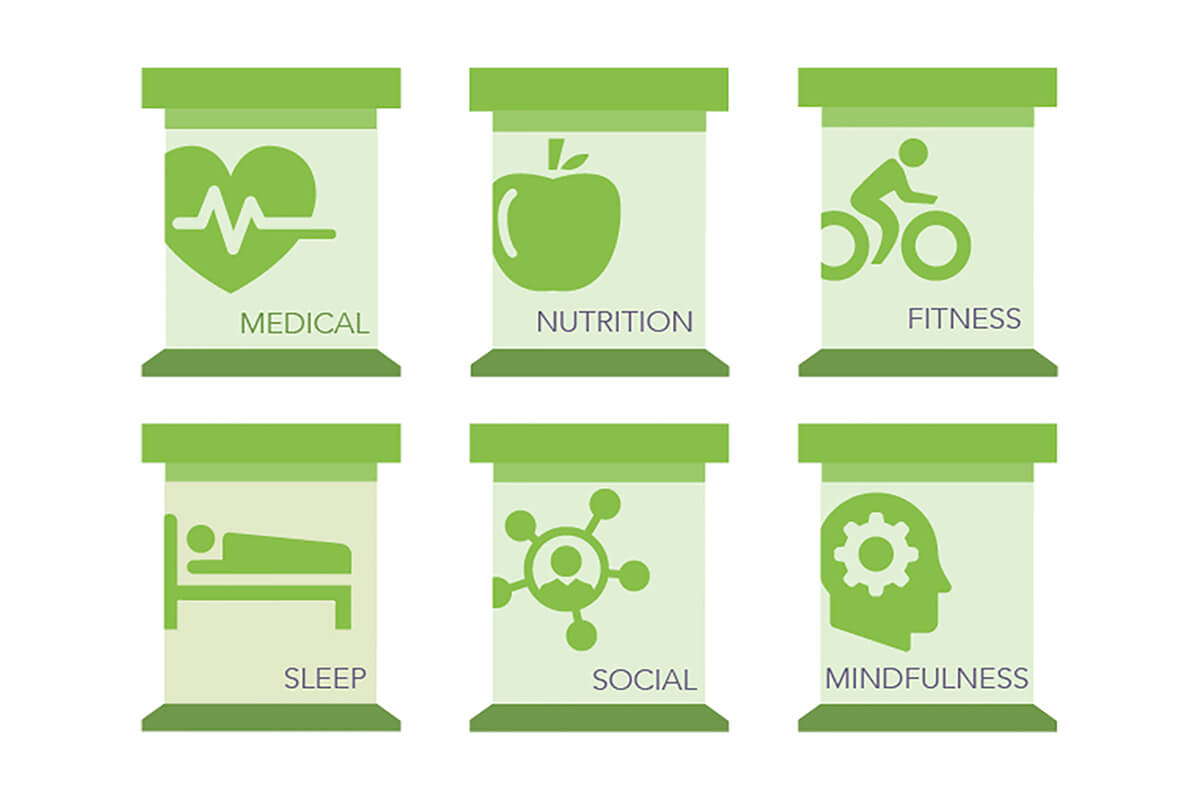
At the time of its launch in 2017, and in its pilot programs before that, Proactive offered a technology-enabled and data-driven approach to care that was unparalleled in traditional medicine. Doctors, a registered dietician, a nurse and health advocates engaged with patients via app, phone, video and in-person interactions. The business model was built on a fee-for-service (FFS) chassis, given the prevailing business model of Proactive Health’s parent company (Atrium Health); however, its value proposition, resources and processes were built for a value-based environment.
Why Did Proactive Health Fail?
There’s a reason the HBS case study is 25 pages long, but I’ll try to distill the answer to this question down to three main points:
- Business model misalignment: As noted above, the model was built for a value-based environment, but as part of Atrium Health, a predominantly FFS organization, the practice was unable to develop a value-based profit formula. Why? Lack of separation from the core organization, which leads to the next point.
- Lack of separation from the core organization: Christensen was clear in his advice on developing potentially disruptive innovations from within established companies: They must be separated from the core organization in an autonomous business unit, with a direct reporting structure to the CEO, if they hope to succeed. We didn’t have this with Proactive Health.While we did separate Proactive Health’s reporting structure from the medical group and had it report through the innovation department, there was no direct line to the CEO. Additionally, the practice still relied on medical group accounting for profit and loss management, which meant the practice was wedded to the core organization’s measures of success. It also relied on central contracting (how we negotiated with payers), instead of being set up as a separate entity that could establish its own contracts. Similarly, the practice relied on the existing marketing function, which saw Proactive as a potential threat to established practices, and thus, it wasn’t promoted. In brief, failure to truly separate Proactive from the incumbent organization—and the associated business model priorities—led to its demise.
- Culture clash: At Atrium, as in most successful incumbent organizations, there was an unwritten rule not to do anything that threatened revenue or margin. But that unwritten rule conflicted with the nature of potentially disruptive innovations: These markets start out small, which means they aren’t big revenue generators right out of the gate. In all organizations, innovation efforts that threaten the revenue or profit formula will die on the vine unless they are established in a separate entity with the ability to test a new business model. Since Proactive wasn’t, it didn’t make it.
What Still Holds True Today: The Unmet Consumer Demands that Proactive Health Addressed
Since there are some new readers here who may not be familiar with our work at the Christensen Institute, I’ll start this section with a quick overview of JTBD. A “Job” is the outcome someone seeks in a given situation. People are always trying to achieve something, but this doesn’t happen in a vacuum. Our circumstances shape our decisions. When Jobs arise in our lives, we “hire” products and services to get those Jobs done. When we find a better way to achieve a Job, we “fire” the old solution and “hire” a new one.
Jobs research extends beyond general demographic categories and participant characteristics to uncover and analyze the functional, social and emotional dimensions that drive an individual’s motivations and how these impact their decision-making and actions.
Early in our Proactive Health development journey, we performed a JTBD analysis to uncover the desired outcomes and associated struggling moments that led patients to “hire” Proactive Health as their provider. We uncovered three distinct JTBDs. They were as follows:
- When I’m unable to maintain my health on my own, help me get customized guidance and support to get on track and stay on track for my future.
- When I am scared about my future, provide a trusted solution so I can address my problem(s) ASAP and be there for my family.
- When I am getting older and I know I need to make a change, keep me accountable to fix bad habits so I can be there for my family.
While we uncovered these JTBDs from patients who “hired” Proactive Health, Jobs persist over time, and these Jobs still exist in the market today. The presence and adoption of models like Omada, Parsley Health, Vitelle and others demonstrate that these JTBDs are alive and well. As individuals seek to achieve their desired outcomes, those who have these Jobs are also hiring a smattering of things outside of these specific models — from digital health offerings to wearables, health coaches and even misinformation.
Advice for Innovators Building for Health-Conscious Consumers
The market is ripe for solutions to serve the Jobs we uncovered at Proactive Health, and many others like them, because traditional offerings are falling short of serving demand for personalized, proactive, preventive care. And that’s not because doctors or insurers or people are “bad” or have bad intentions. Prevailing offerings fall short because their business models weren’t built to serve these Jobs.
A market opening created by unmet consumer demand is an opportunity for business model innovation and in many cases, disruptive innovation. But innovations don’t succeed if they aren’t grounded in helping people achieve a desired outcome uniquely well. So, whether it’s the Jobs to Be Done shared here, or other related ones, ensure you’re grounding your innovations — intrapreneurial or entrepreneurial ones alike — in a consumer or customer JTBD that you can serve uniquely well.
If you don’t, you’re competing against luck. And that doesn’t usually end well.
Additionally, if you are building from within an incumbent organization, ensure you separate the innovation from the core organization, with a direct line to the CEO, so you can benefit from the coverage a CEO provides. That includes the freedom to have a different — and even conflicting — business model from the core organization, including different measures of success and a different culture.
So, in summary, Proactive Health wouldn’t have succeeded if we’d just waited eight years and built it the same way. However, you can learn from our mistakes and incorporate these lessons learned into your startup, intrapreneurial innovation, or those that you fund, to capture the market opportunity, nail the Job to Be Done and have yours be a story of success.

About the Author

Recent Posts