October 7, 2026
Original Parts Included
Earlier this week, I went to a 40th wedding anniversary party for a close friend of mine. I was one of his groomsmen back in 1986. About 40 of us gathered together to celebrate him and his wife’s four decades of marriage. My wife and I sat at a table of eight at the wedding reunion. All of us are in our mid-60s.
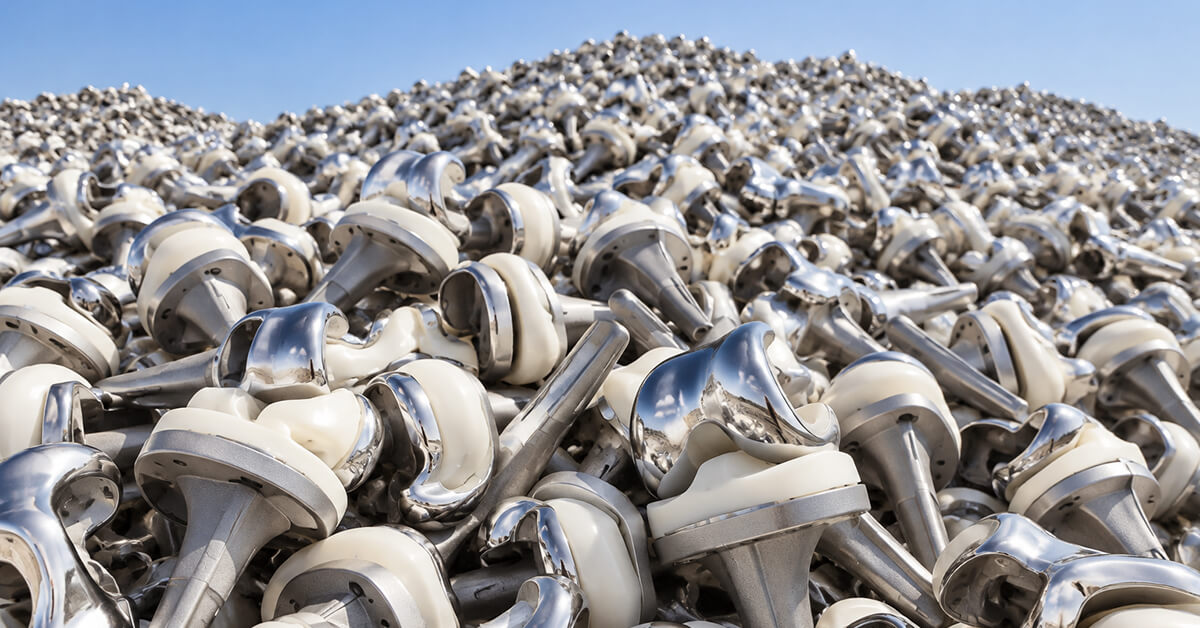
Of the eight people at our table, four had their knees replaced. Some one knee. Some two knees. All of us said we know people who had their knees replaced. All of us said we know people who are scheduled to have their knees replaced. None of us are orthopedic surgeons. And we were not at an artificial joint conference or exhibit of any kind.
The experience reinforced something I’ve said for many years: I want to die with all my original parts. No wires. No glass. No plastic. No Teflon. No titanium. No rubber. No mesh. No batteries. No metal. Nothing that I didn’t come into this world with back in 1960.
Based on anecdotal evidence, like earlier this week, and empirical data, which I just looked up, I’d be in the minority if I could make that happen. I’m happy to be the $6 man.
Last November, seven researchers with the orthopedic surgery department at Rush University Medical Center in Chicago published a study in the Journal of Arthroplasty. Yes, the Journal of Arthroplasty. Joint surgery is so prevalent that it has its own journal. Anyway, they projected that the number of total knee replacement procedures will rise from a little more than 1 million in 2022 to nearly 2.8 million by 2040 with an annual growth rate of nearly 6%.
Hips? Even faster. From a little less than 600,000 in 2022 to nearly 2.2 million by 2040 with an annual growth rate of 7.6%, according to the study.
“Growth in primary TKA (knees) and THA (hips) is expected to continue and outpace national health expenditure,” they said.
That’s really bad news for employers who have to pay for all these new knees and hips.
In August, the Business Group on Health released the results of its 2027 Employer Healthcare Strategy Survey. Sixty-eight percent of 127 employers surveyed cited “musculoskeletal” as a top medical condition driving their higher medical costs this year. Musculoskeletal was second only to cancer, which 92% cited as a top medical condition cost driver. A distant third was cardiovascular medical conditions at 37%. Bones beat hearts.
My question is, why do all these people need new knees? Do they all need new knees? Maybe they do. Maybe they don’t.
At the moment, I don’t. I played sports in high school and college, but I never was on any high school or college sports team. I got cut from baseball twice in high school. I quit before getting cut from basketball in college. Yes, I tried out for my Division III college basketball team. Maybe I have less wear and tear on my knee joints than other people. I did have arthroscopic knee surgery on my right knee in 2001 to take out some torn cartilage from a cheap shot in a football game during gym glass in high school.
The last time I checked the life expectancy charts from the Centers for Disease Control and Prevention, a white male born in 1960 had a life expectancy of 83.5 years. Statistically, that gives me 17.5 years to not get my knees replaced. Wish me luck.
If we want to build better healthcare, let’s build better ways to care for our joints and to prevent knee and hip injuries. We’d save billions of dollars. And it would give us something else to talk about at parties involving people in their mid-60s.

About the Author

Recent Posts