May 27, 2026

Reality Sets in for Telemedicine and Retail Health
I’ve always been a huge fan of the Gartner Hype Cycle. As a healthcare business journalist for more than 40 years now, it’s helped me look at potentially disruptive innovations in healthcare with the appropriate skepticism. I have permanent residence in the Cycle’s Trough of Disillusionment.
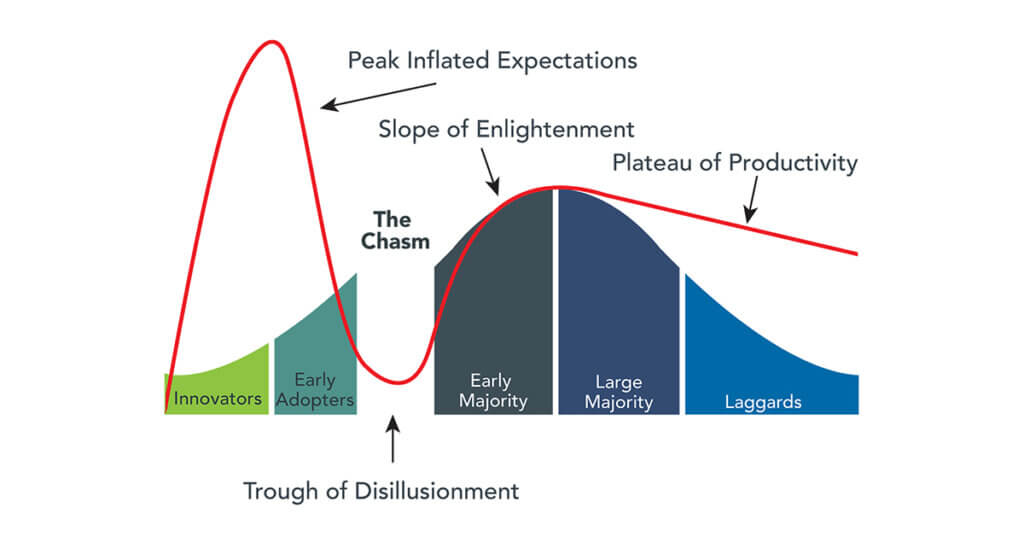
Two recent reports reminded me of the Gartner Hype Cycle, as two much-hyped and feared innovations in care models have reached the final phase: the Plateau of Productivity. In other words, the care models didn’t destroy and replace traditional care as many experts predicted, but rather settled into their own niche roles in care delivery in the U.S.
The first care model is telemedicine. It limped along before the COVID-19 pandemic. The pandemic sent it into orbit. So much so, some predicted it would replace in-person care. Others predicted it would lead to a dramatic increase in utilization of healthcare services as brief telemedicine visits would spur follow-up in-person visits, emergency room visits, hospitalizations, diagnostic tests and medical procedures.
Slightly higher utilization? Yes. A dramatic increase? No. At least according to this study published earlier this year in the Annals of Internal Medicine. The study by three researchers from the University of Utah and the University of Michigan analyzed outpatient visits by about 15,000 Medicare beneficiaries from 2021 through 2023. Here’s what they found:
- 83.6% of the beneficiaries had in-person outpatient visits only compared with 16.4% of beneficiaries who had telemedicine-only outpatient visits.
- 30.1% of telemedicine users had one or more emergency room visits compared with 22.6% for non-telemedicine users.
- 18.7% of telemedicine users had one or more hospital discharges compared with 14.4% for non-telemedicine users.
- 88.2% of telemedicine users filled or refilled at least six prescriptions compared with 80.3% for non-telemedicine users.
Turns out, telemedicine is a good option for many people. But it wasn’t an industry game changer.
Same for retail health clinics, our second care model. Many experts predicted retail health clinics in big box stores would become the primary care site of choice for consumers, given their greater accessibility and lower prices. Some predicted retail health clinics would put primary care practices out of business. Others said it was only a matter of time before a retail health clinic misdiagnosed a dangerous medical condition and killed a walk-in patient.
I don’t know if a retail health clinic ever misdiagnosed and killed someone. But I do know retail health clinics didn’t alter the primary care landscape in any dramatic or permanent way. I wrote about that in this 2024 blog post, “Has the Retail Health Boom Gone Bust?”
The National Center for Health Statistics (NCHS) at the U.S. Centers for Disease Control and Prevention answered that headline’s question in a new data brief released this week. The data is from 2024.
The NCHS said only 19% of consumers visited a retail health clinic at least once over the past 12 months. That’s compared with 27.6% of consumers who visited an urgent care center at least once over the past 12 months.
Retail health clinics were most popular with seniors. Twenty-five percent of consumers 65 and older had at least one retail health clinic visit over the past year, compared with 20.1% for consumers 18 to 64, and 10.9% for those under 18.
Ultimately, telemedicine visits and retail health clinics turned out to be nice-to-haves for certain patient populations, and provider organizations should offer both to consumers on their roster of care options. But neither permanently disrupted nor stamped out traditional provider business models.
Let’s see what happens with artificial intelligence (AI). Right now, I’d say AI is in the Gartner Hype Cycle’s Peak of Inflated Expectations phase. I’m waiting for it in the Trough of Disillusionment.

About the Author

Recent Posts