July 27, 2025
Sage, Easy-to-Digest Advice from a Great Business Builder
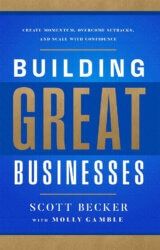 Scott Becker’s Building Great Businesses is less a how-to manual than a reflection on what it actually takes to build organizations that endure. Drawing on decades as an entrepreneur, investor, and advisor, Becker distills a lifetime of experience into a series of practical lessons on leadership, culture, resilience, and execution. The book is refreshingly free of buzzwords and management fads. Instead, it focuses on the timeless disciplines that separate lasting companies from those that simply enjoy a moment of success.
What I found most compelling is Becker’s appreciation for the fundamentals. Great businesses are rarely built through a single breakthrough idea. They are built by recruiting exceptional people, maintaining a relentless focus on customers, making thoughtful decisions, and executing consistently over long periods of time. Becker reminds us that success is usually the product of thousands of small decisions made well rather than a handful of transformative moments.
The book’s conversational format makes it accessible and engaging, although readers looking for a single unifying framework may find it intentionally eclectic. I viewed that as a strength. Leadership is rarely linear, and Becker’s stories reflect the realities of building businesses in an unpredictable world.
Perhaps the book’s most important contribution is its reminder that great institutions are built the same way great businesses are: one decision, one relationship, and one act of disciplined execution at a time. That lesson extends well beyond entrepreneurship. It is increasingly relevant to leaders in healthcare, education, government, and other sectors grappling with complexity and change.
Building Great Businesses is an insightful read for entrepreneurs, executives, board members, and anyone committed to building organizations that create enduring value. In an era captivated by disruption and rapid growth, Becker makes a persuasive case that leadership, character, and disciplined execution remain the most durable competitive advantages.

About the Author

Recent Posts