November 4, 2026
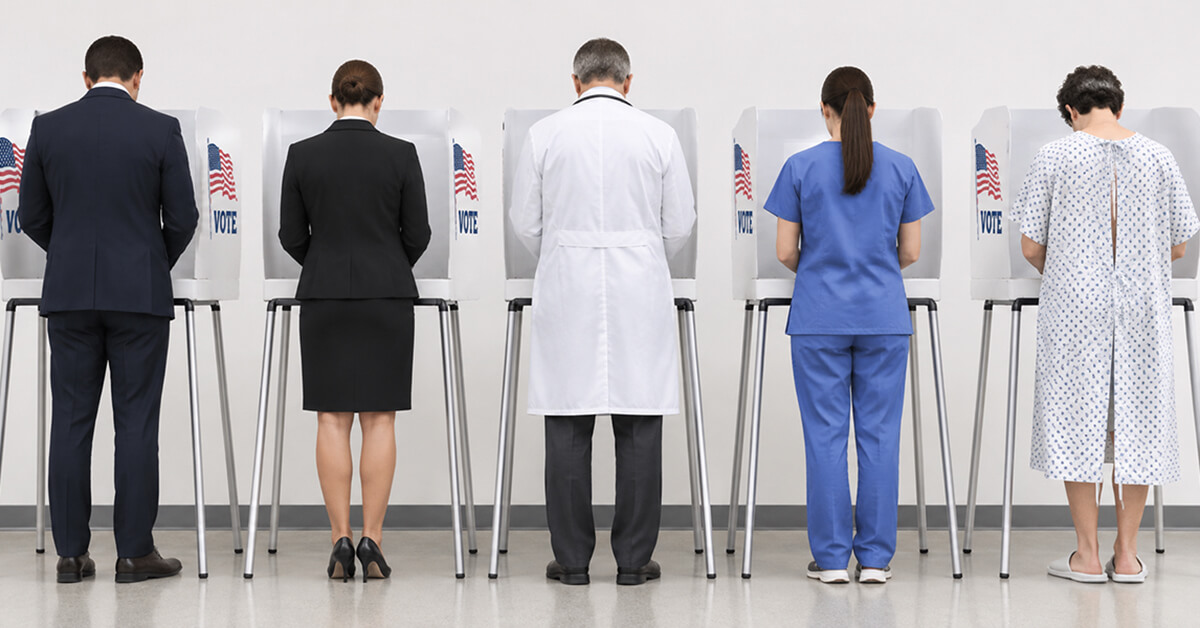
How Did Healthcare Executives Vote Yesterday?
There’s a sports adage that says you are what your record says you are. You’re not better or worse than your win-loss record. If you’re 5-3, you’re better than average. If you’re 4-4, you’re average. If you’re 3-5, your below average. What you say you are doesn’t matter. It’s your record that counts.
The same applies to voting in elections in the U.S. You are what your vote says you are. Or more directly, you are your vote. What you say you are doesn’t matter. It’s your vote that counts.
The U.S. held mid-term elections across the country yesterday for hundreds if not thousands of federal, state, regional, county, township, city and local government positions. I voted in my precinct in person early on Nov. 1. Given the preemptive attempts by the Cheeto Jesus administration to undermine the election results, I was getting antsy voting by mail, which traditionally is safe and legal, or in-person on Nov. 3, which traditionally is safe and legal.
I am my vote. I own it. It’s who I am.
But I’ve always been curious about how healthcare executives vote. The people who run health systems. The people who run health insurance companies. The people who run drug companies. The people who run device manufacturers. The people who run companies that support the healthcare industry like EHR vendors, group purchasing organizations and management consulting firms. Not to mention doctors and nurses and other clinicians.
Do they vote based on what’s good for their respective organization? Do they vote based on what’s good for their customers, i.e., patients and members? Do they vote based on what’s good for the country? Or do they vote based on their personal beliefs or what they think will be best for them personally from a socioeconomic standpoint?
If I had to bet, I would bet on the latter. I think most people working in healthcare from the C-suite down to the frontlines of patient care vote based on their personal beliefs or what’s best for them. Not what’s best for the country, their organization or their customers.
Gallup came out with an interesting consumer poll on Oct. 25, or a little less than two weeks before the election. It’s based on a representative survey of more than 3,000 U.S. adults. Gallup didn’t break results down by industry or occupation, but let’s assume people in healthcare generally think the same way as the people who took this poll.
One question Gallup asked was about the values that all Americans share. There was a list of 12 values. Of the 12, there were five that you could find in most healthcare mission, vision and value statements: service, kindness, respect, equality and fairness. Gallup asked whether the respondent thought most Americans shared that particular value. Here are the disappointing results:
- 30% said service
- 24% said kindness
- 20% said respect
- 15% said equality
- 15% said fairness
Asked which of those 12 values the country needs most today, here’s how those five values common in healthcare came out:
- 29% said equality
- 26% said fairness
- 24% said respect
- 20% said kindness
- 13% said service
If you just look at service, only 30% said Americans share service as a value, and only 13% said the most-needed value right now is service. Or, if you just look at equality, only 15% said Americans share equality as a value, and only 29% said the most-needed value right now is equality.
We must build better healthcare. But we need to believe it to do it, and we need to vote like we believe it. You are your vote. You’re a healthcare executive. How did you vote yesterday?

About the Author

Recent Posts